





With energy storage installed, how on earth do you make money? - Energy Storage KnowLab


"What exactly does commercial and industrial (C&I) energy storage rely on to make money? 3 core revenue models, explained in one article."
Many enterprises ask the exact same question when inquiring about energy storage: "What exactly does energy storage rely on to make money?"
Some people believe that energy storage is simply "charging at low prices and discharging at high prices" to profit from the peak-valley electricity price differential. In fact, this is only the most basic source of revenue for C&I energy storage.
For a mature C&I energy storage system, revenue typically comes from three aspects:
Peak-Valley Arbitrage + Demand Management + PV-Storage Synergy (Improving Solar Self-Consumption Rate)
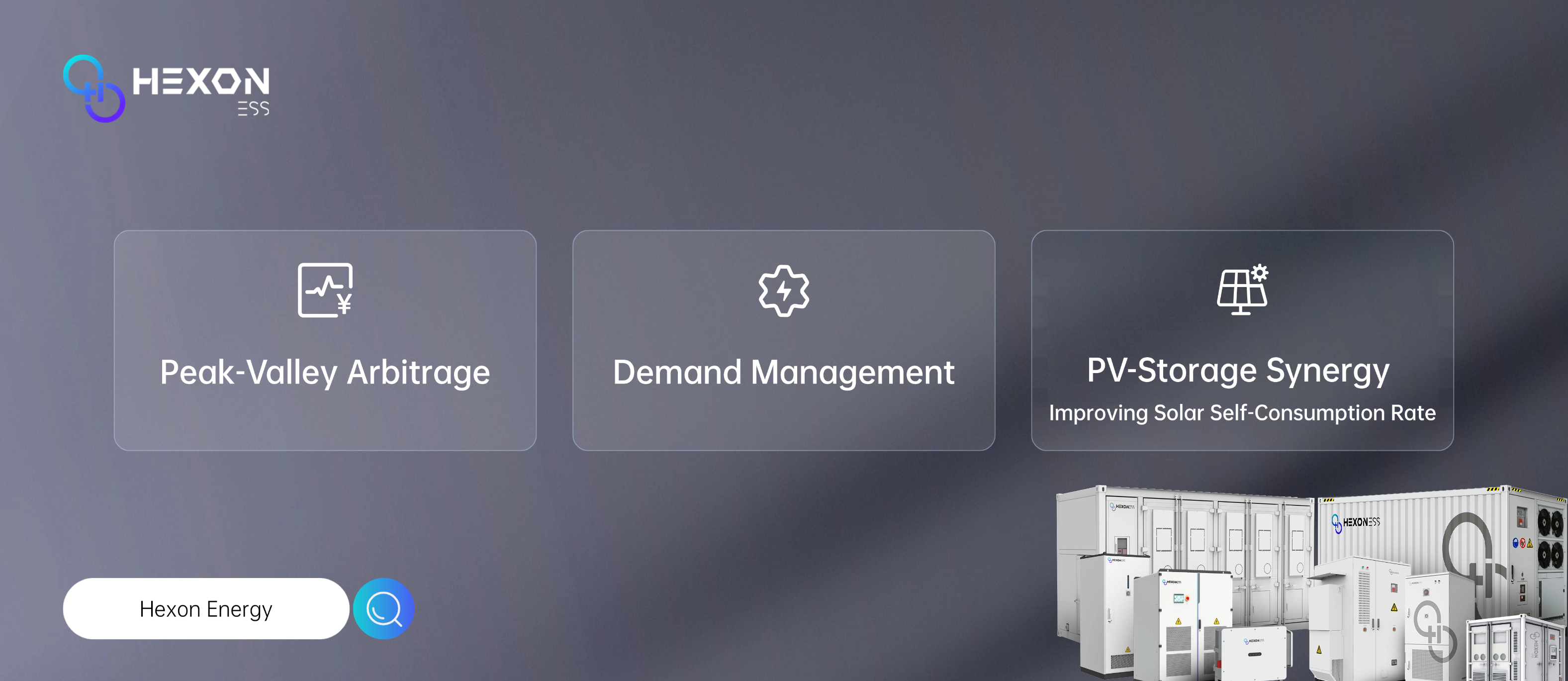
Understanding these three revenue models makes it clear why an increasing number of industrial parks, factories, and commercial complexes are beginning to deploy energy storage.
Type 1 Revenue: Peak-Valley Arbitrage
This is the most familiar and easily understood revenue model for everyone.
The logic is very simple:
Charge when valley electricity is cheap, and discharge when peak electricity is expensive.
For example:
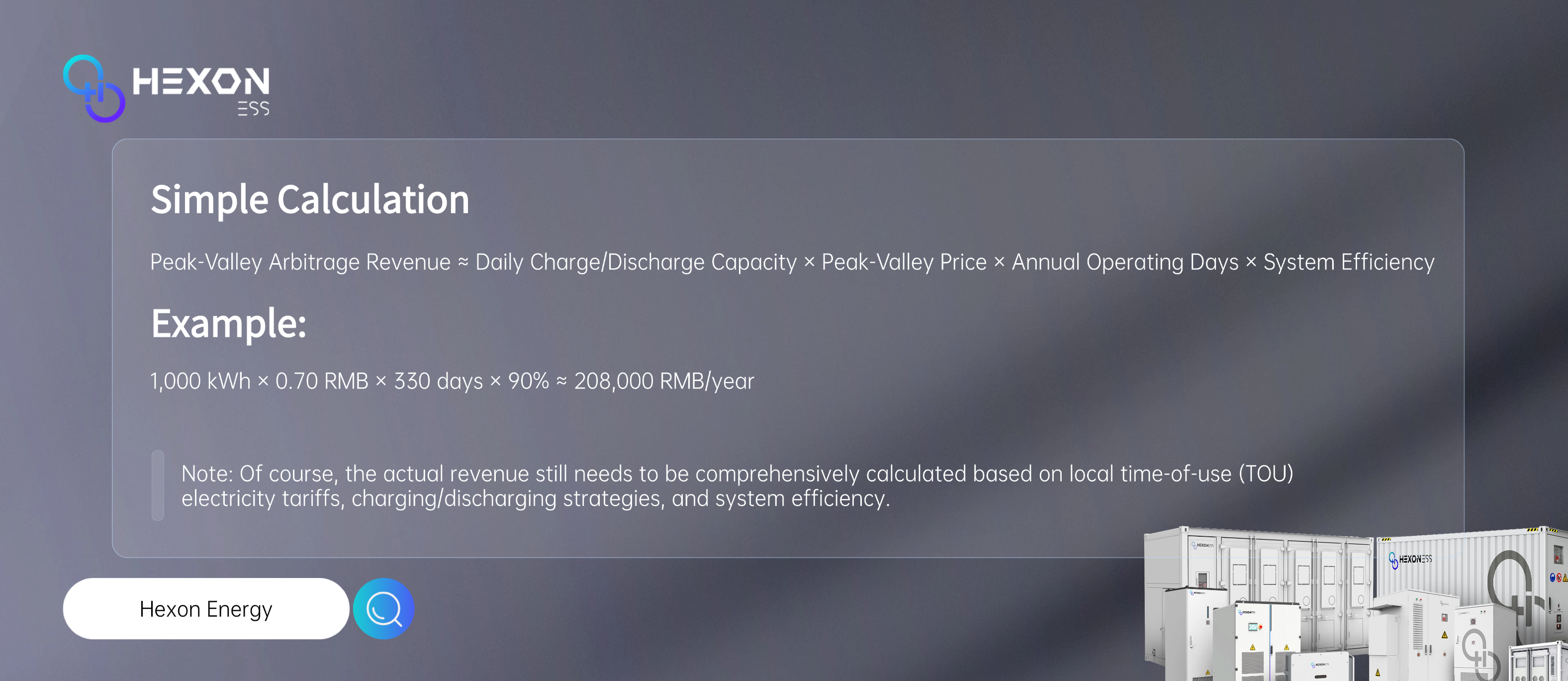
Assume the valley electricity price in a certain region is 0.45 RMB/kWh, and the peak electricity price is 1.15 RMB/kWh.
If an enterprise utilizes energy storage daily to:
Charge 1,000 kWh during the night
Discharge 1,000 kWh during the day
The theoretical price difference would be:
1.15 - 0.45 = 0.70 RMB/kWh
Even after deducting factors like charging/discharging efficiency and equipment wear and tear, it still generates a stable revenue. For regions with large peak-to-valley price differentials, this is typically the primary income source for energy storage.
Type 2 Revenue: Demand-Side Management
Many enterprises are unaware that in addition to volumetric electricity charges (based on total energy consumed), there is another easily overlooked component in their power bills: Basic Electricity Charges (also known as Demand Charges).
For large industrial users subject to demand pricing, the peak load reached by the enterprise during a specific interval can determine the basic electricity charge for the entire month.
For example: A factory typically operates with a load of only 1,800 kW. One day, due to the simultaneous startup of several large pieces of equipment, the instantaneous load spikes to 2,200 kW.
Without energy storage: This 2,200 kW would likely become the maximum demand for that month.
With energy storage: At the exact moment the equipment starts up, the energy storage system quickly injects 200 kW of power to bridge the gap.
Consequently, the maximum load drawn from the power grid remains capped at 2,000 kW.
This is the core value of energy storage in peak shaving. For many manufacturing enterprises, demand-side management alone can optimize electricity costs by tens of thousands, or even hundreds of thousands of RMB annually.
Type 3 Revenue: Improving PV Self-Consumption Rate
An increasing number of enterprises have installed rooftop solar photovoltaics (PV). However, this has brought about a new challenge:
The period of maximum power generation at noon often coincides with the enterprise's lowest electricity consumption.
Consequently:
A massive amount of solar power can only be fed back into the grid at a low price.
In certain regions, it can even lead to solar curtailment (wasted solar energy).
The role of energy storage is to capture and store this green electricity that "cannot be consumed in time," and then release it during the afternoon production peaks or during overtime night shifts.
This approach not only reduces electricity procurement costs but also enhances the self-consumption ratio of the PV system.
To put it simply:
Without energy storage, PV only solves the problem of "generating power."
With energy storage, it truly achieves the goal of "utilizing power."
For "PV + Energy Storage" projects, the synergistic operation of both systems often yields significantly better overall economic viability.
Revenue is Not a Simple Sum, But a Comprehensive Optimization
In actual projects, these three revenue models do not exist in isolation. A mature EMS (Energy Management System) will automatically optimize charging and discharging strategies based on:
Time-of-Use (TOU) tariffs
Real-time enterprise load
PV power generation status
Energy storage State of Charge (SOC)
For example:
Morning: Prioritize the consumption of solar PV power.
Afternoon: Shave peak demand to manage load.
Evening: Discharge to capitalize on the peak-valley price differential.
Through intelligent dispatch, the overall financial return is maximized. Therefore, even with the exact same energy storage system configuration, the actual returns will vary from one enterprise to another.
For Enterprises Deploying Energy Storage, the Focus Should Be on "Comprehensive Revenue"
In recent years, with the continuous refinement of Time-of-Use (TOU) electricity pricing mechanisms, the ongoing optimization of commercial and industrial (C&I) tariffs, and the growing demand for corporate energy cost control, C&I energy storage is rapidly evolving from an "optional add-on" into an essential component of modern energy management.
For enterprises evaluating whether an energy storage project is worth the investment, the focus should extend far beyond mere peak-valley arbitrage. Instead, a comprehensive evaluation must factor in:
✔ Peak-Valley Arbitrage Revenue
✔ Demand-Side Management Savings
✔ PV Self-Consumption Maximization
✔ Power Reliability & Backup Capabilities
- ✔ Digitalized Energy Management Value
Only by conducting professional assessments that combine an enterprise's actual load profile, electricity consumption habits, and local tariff policies can an energy storage solution be designed to truly fit its specific needs.
Looking ahead, as electricity market mechanisms mature, the value of C&I energy storage will transition from simply "reducing electricity bills" to enhancing energy efficiency, strengthening power resilience, and optimizing corporate integrated energy management—ultimately creating more long-term, stable value for enterprises.